

Climate change is an important concern of Rest's members. Rest understands that climate change presents a financial risk that could lead to serious economic and social consequences. We also see the opportunities for Rest to contribute to the transition to a more sustainable, lower carbon global economy.
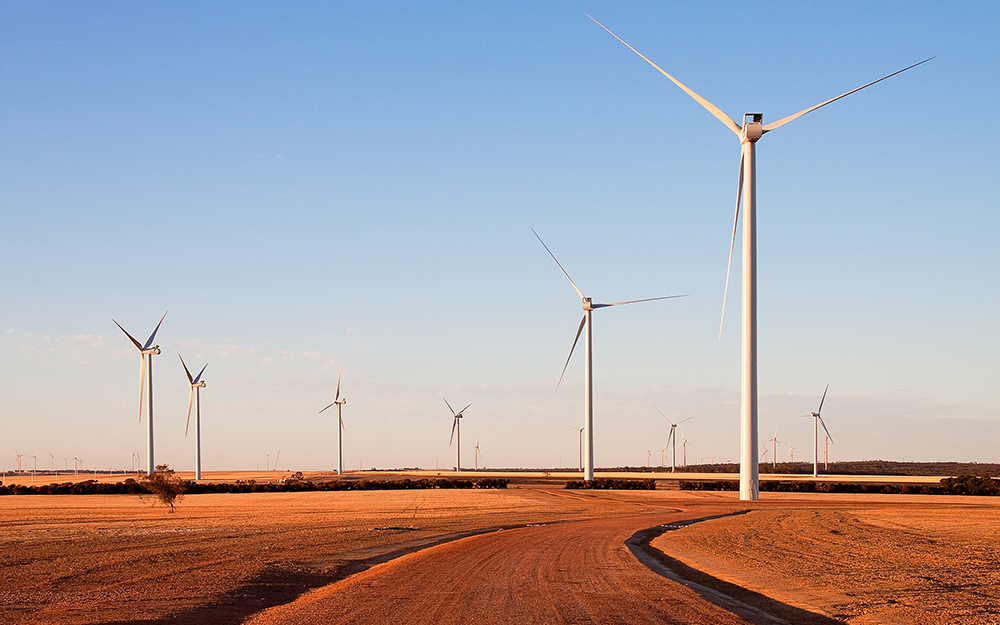
Pictured: Collgar Wind Farm
Rest has a long-term objective to achieve a net zero carbon footprint for the investment portfolio by 2050. Our climate transition plan outlines the objectives and initiatives for our transition towards a lower-emission economy and is available in Appendix I of the Voluntary Climate Change Supplement.
Our net zero carbon footprint by 2050 objective is consistent with the goals of the Paris Agreement. The Paris Agreement seeks to keep global temperature rise this century to well below two degrees Celsius above pre-industrial levels and to pursue efforts to limit the temperature increase even further to 1.5 degrees Celsius.
Rest’s net zero by 2050 objective is an important step in our approach to managing environmental social and governance (ESG) factors in our investment process.
Rest established a Climate Change Policy in 2018. This Policy, which is reviewed annually, guides how we respond to climate change and manage the associated financial risks and opportunities.
Our sustainability strategy is aligned to five United Nations Sustainable Development Goals (SDGs), including goal 7 (affordable and clean energy) and goal 13 (climate action). For more information on Rest’s sustainability, responsible investment and climate change practices, our Annual Report, Voluntary Climate Change Supplement and Voluntary Sustainability and Responsible Investment Supplement are available on our annual reports page.
Investing responsibly helps us manage risk, maximise investment opportunities and contribute to a sustainable future